That $20 Bolt Could Be Costing Your Shop a Whole Lot More
 You've got a piece of heavy equipment or a boat in the shop for repairs. The mechanic has everything apart, knows what needs to be fixed, and is ready to put it back together.
There's just one problem.
The bolt he needs isn't in the bin.
Now somebody has to go find it. Maybe that means a trip to Home Depot, then Lowe's, and finally an auto parts store. And if it's an unusual metric size, there's a good chance none of those places will have it.
Meanwhile, the equipment is still sitting in the bay.
At Bayou City Bolt, we've seen situations like this more times than we can count. When a shop doesn't have the right fastener on hand, the cost goes well beyond the price of the part itself.
Our customized bin stocking and vendor-managed inventory (VMI) services help heavy equipment repair shops, maintenance departments, and industrial facilities throughout Greater Houston avoid those unnecessary headaches.
Because keeping the right hardware on hand shouldn't be taking time away from the work you're actually getting paid to do.
The Hidden Labor Costs of Self-Stocking
Let's say your mechanic needs a $20 fastener to finish a repair.
You send him out to find it.
He drives to one store, looks through the hardware section, and discovers they don't have the right size. So he tries another store. Maybe he finds something close, but not exactly what he needs.
Before you know it, two or three hours have gone by.
At an estimated labor cost of $50 an hour, that's $100-150 spent looking for a $20 part.
And that's before you account for fuel, vehicle expenses, or the possibility of having to order the fastener online and wait another day or two.
But there's another cost that's easy to overlook.
While your mechanic is out looking for hardware, he's not working on the equipment. If another technician is waiting for that repair to move forward, you've got two people losing productive time. And the machine is still taking up space in a bay that could otherwise be used for another job.
That's where the economics of self-stocking start to change.
The question isn't simply whether you can buy a box of bolts for less money somewhere else.
It's how much your shop is spending to make sure those bolts are available when they're needed.
Self-Stocking Doesn't Always Mean Spending Less
Here's something else we see when we visit repair shops.
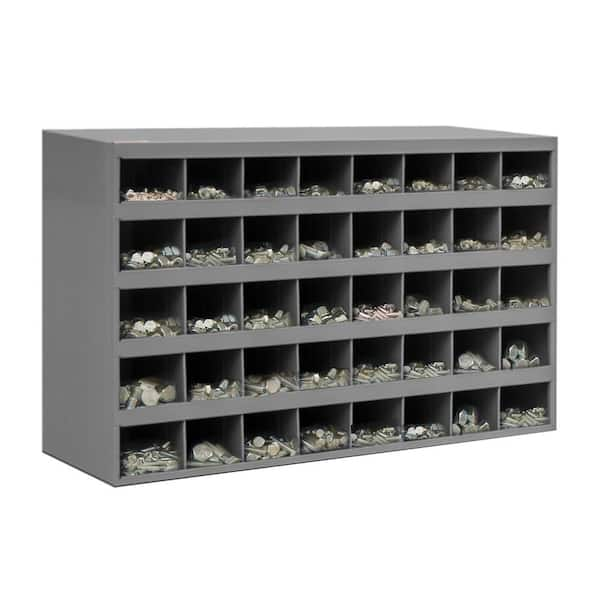
The bins are full. There are boxes of extra fasteners stacked on top. Some of the compartments aren't labeled, and others contain a mixture of different sizes.
A mechanic needs a particular bolt, so he starts digging through the bins.
He finds something that looks close, tries it, realizes it doesn't fit, and puts it back in a different compartment.
Eventually, nobody is entirely sure what's in there anymore.
When the shop runs low, somebody orders another box. But they may already have plenty of that fastener somewhere in the shop. They just can't find it.
Buying fasteners in bulk can make sense when you're using large quantities regularly. But if you only need 20 bolts and the supplier requires you to purchase 100, the other 80 may sit untouched for months.
Multiply that across dozens of sizes and grades, and you've got money tied up in inventory that isn't moving.
Those unnecessary purchases contribute to your inventory carrying costs, along with the space and time required to store and manage them.
At Bayou City Bolt, we sell from bulk inventory, so customers can purchase the quantities they actually need rather than being forced into full-box purchases.
And if a bin doesn't need replenishment, we don't fill it simply because we're there.
A properly stocked bin doesn't have to be a full bin.
How Vendor-Managed Inventory Takes the Work Off Your Plate
Your mechanics should be working on equipment, not counting bolts, organizing shelves, and driving around town looking for hardware.
With our vendor-managed inventory services, we take over much of that work so your shop can focus on repairs.
But we don't walk into every facility with the same assortment and expect it to work for everyone.
We start with an on-site consultation to look at your existing inventory, where it's stored, and how your technicians use it.
Sometimes the bins are in the wrong location. Sometimes they're too small for the material being stocked. And sometimes a different rack or storage arrangement would make more sense.
We also talk with the people who actually use the fasteners, including purchasing personnel, maintenance supervisors, and mechanics.
We want to know what they're using regularly, what they're having trouble finding, and whether the inventory includes the correct grades, sizes, and head styles.
From there, we customize the bins and stocking quantities around the customer's needs.
Regular Monitoring Without Unnecessary Overstocking
When we establish a new program, we generally start with more frequent visits while we learn the shop's usage patterns.
Once we've established appropriate stocking levels, we typically move to a biweekly schedule, although some customers need more or less frequent service.
During those visits, we check inventory and prepare a quotation for the material that needs replenishment.
The customer can review that quote, adjust quantities, add or remove products, and approve the order before anything ships.
We then prepare and deliver the material, and our driver can stock the bins directly.
If a customer runs low between visits, they can call or email us for additional material.
We're not trying to sell customers as many fasteners as we can fit into their bins. We're trying to make sure they have what they need.
Better MRO Inventory Management Starts With the Right Hardware
One of the biggest advantages of a managed bin program isn't simply having someone else count the inventory.
It's having someone who understands the fasteners involved.
We work with a directional drilling company that services its own heavy equipment.
Before we took over their bin service, their employees were making trips to retail hardware stores to find replacement fasteners. When they couldn't locate exactly what they needed, they sometimes substituted lower-grade or otherwise unsuitable hardware just to get a repair moving.
That created problems beyond wasted time.
Heavy equipment repairs may require specific bolt grades, head styles, and thread configurations. Using whatever happens to be available at the hardware store isn't necessarily an appropriate solution.
When we established their bin program, we worked to make sure they had access to the proper bolt grades and head styles for their equipment.
We also added a metric fastener assortment, which is particularly important because many heavy equipment applications use metric hardware that's difficult to find at local retail stores.
Now, instead of repeatedly searching for those products, their technicians have a more reliable supply of the material their repairs call for.
That's what better MRO inventory management looks like in practice.
It's not just about keeping inventory organized. It's about making sure maintenance and repair personnel can get the correct material without unnecessary interruptions.
Sometimes the Most Valuable Part of Bin Service Is Having Someone Ask
There's another benefit to our bin service that doesn't always show up on a spreadsheet.
We spend time in our customers' shops. And while we're there, we talk to the technicians.
We might ask, “Is there anything else you've been having trouble finding?”
You'd be surprised how often that simple question leads to something.
A mechanic remembers a specialty bolt he's been meaning to order. Someone brings us a sample they haven't been able to identify. Another technician needs a cutting tool that isn't part of the regular inventory.
We've even gone out into a scrap yard with calipers to measure a bolt on a large piece of equipment so we could help the customer identify the correct replacement.
Recently, we had a bin-service customer who kept asking us for drill bits during our visits.
After hearing the same request several times, we suggested stocking a drill bit assortment so they wouldn't have to keep scrambling for them.
And that's worth mentioning: our bin service isn't limited to nuts and bolts.
Depending on the customer's needs, we can also stock drill bits, cutting tools, taps, and other products from our line card.
The goal is to make the material your people regularly need easier to find and easier to replenish.
Not Every Repair Shop Needs the Same Bin Service
Not every customer needs the same level of service.
For a busy heavy equipment repair facility, regular inventory monitoring and replenishment can make a lot of sense.
The same is true for recycling operations, concrete crushing facilities, pump and compressor service departments, and manufacturers with multiple maintenance or production workstations.
But what about a smaller shop that doesn't use enough fasteners to justify regular visits?
We can help with that, too.
We can establish an organized, properly labeled bin system that the customer manages independently. When something runs low, they can simply call or email us with the product information from the label.
For customers who prefer to check and stock material themselves, we can deliver individually labeled and counted packages so their employees can verify everything before putting it away.
Our bin service has no service fees, no contracts, and no program minimums.
Customers purchase their bins and the material they order, with replenishment quotations submitted for approval before anything ships.
We're not asking customers to surrender control of their inventory. We're offering to take unnecessary work off their hands.
Is Self-Stocking Solving Your Inventory Problems or Creating More?
If you're managing your own fastener inventory, take a look at how it's working.
Are there boxes of unused material sitting on top of the bins? Are the compartments clearly labeled? Do your mechanics regularly leave the shop to purchase hardware? Are you buying full boxes when you only need a handful of fasteners?
And perhaps most importantly, how often does a repair get delayed because the right bolt, nut, or washer isn't available?
Those are the kinds of questions we ask when evaluating a customer's current inventory system.
Because the real cost of self-stocking isn't just what you pay for the hardware.
It's the time spent managing it, the material you purchase unnecessarily, and the work that gets delayed when something runs out.
At Bayou City Bolt, we help repair shops and industrial facilities throughout Greater Houston keep the right fasteners available without making inventory management another full-time responsibility.
Whether you need a fully managed bin program or simply a better-organized system for ordering your own supplies, we'll help you find an arrangement that makes sense for your operation.