
.webp)
When someone calls us looking for anchor bolts, one of the first things we need to know is pretty simple: Has the concrete been poured yet?
If you're preparing for a new concrete pour, L-shaped anchor bolts are commonly installed as part of the foundation before the concrete is placed. If you're attaching something to existing concrete, you're more likely to be looking at a post-installed solution such as a wedge anchor or drop-in anchor.
From there, the application matters. Does the connection need to be permanent? Would you rather be able to remove the equipment later without leaving a threaded stud sticking out of the concrete? What does the project specification require for the size, grade, embedment, finish, and concrete conditions? There isn't one anchor that's right for every job. Here's how we help customers start narrowing it down.
L-Shaped Anchor Bolts Make Sense Before the Concrete Is Poured
L-shaped anchor bolts are a common choice for new concrete foundations. They're positioned before the pour so that the bent portion of the anchor becomes embedded in the concrete as it hardens.
That bend serves an important purpose. The concrete surrounding the bent end provides resistance against the anchor pulling upward and helps keep the connection secured in the foundation. You'll see these foundation anchor bolts used for structural steel and base plates, columns, equipment, light poles, signs, and other applications where the anchorage can be planned as part of the original concrete work.
What Do We Need to Know Before You Order?
The application and project specifications give us most of what we need. We'll confirm the diameter, length, material or grade, and quantity, along with whether the anchors will be indoors or exposed to the elements. That exposure can help determine the appropriate finish, and we'll also ask what nuts and washers the installation requires.
Bayou City Bolt stocks common L-shaped anchors in F1554 Grade 55, with Grade 36 and Grade 105 available as special-manufacturing options when a project calls for something different. We can also arrange custom L-shaped anchors with special thread lengths, hook lengths, grades, or stainless steel when required.
Think You Received the Wrong Diameter? Measure the Threads.
There's another detail worth knowing if you're checking an L-shaped anchor bolt after it arrives. These anchors use rolled threads, and the unthreaded portion of the bar can measure smaller than the nominal thread diameter. For example, someone may order a 5/8-inch L-shaped anchor, measure the unthreaded portion when it arrives, get approximately 9/16 inch, and assume they received the wrong product.
We've had those calls. When you're checking the diameter, measure the threaded end rather than the blank or hook portion of the anchor.
What Happens When an L-Shaped Anchor Ends Up in the Wrong Place?
One of the challenges with a cast-in-place anchor is that you need to get the location right before the pour. We've seen customers pour around their L-shaped anchors and later discover that the anchors don't line up with the structure they're ready to install.
The concrete is already cured, so the original anchors can't simply be moved. That's where a post-installed solution can come back into the conversation. We've seen customers have to cut the tops off the misplaced L-shaped anchors, drill new holes in the cured concrete, and install wedge anchors where the connection was actually supposed to go.
Wedge Anchors Are Built for Existing Concrete
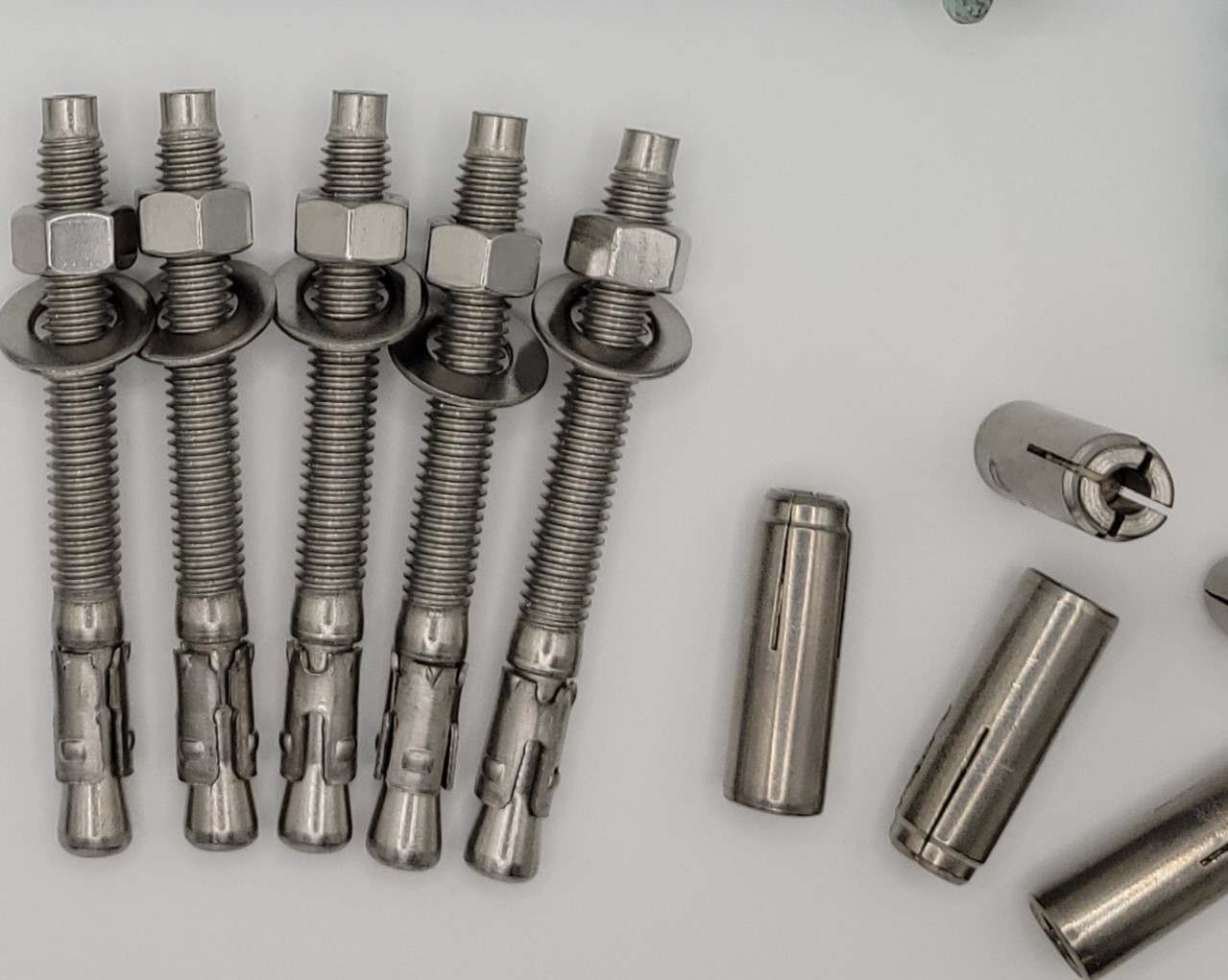 If you're installing something after the concrete has cured, a wedge anchor is often where the conversation goes next. We commonly see wedge anchors used for warehouse racking and shelving, machinery and equipment, handrails, door frames, light poles, fencing, base plates, and other secondary installations.
Consider warehouse racking. The final layout may change or simply may not be known when the slab is poured. A post-installed wedge anchor gives the installer the flexibility to establish the layout first and create the anchoring points afterward.
How Does a Wedge Anchor Work?
The basic process is fairly straightforward. A hole is drilled into the concrete at the appropriate diameter, and the wedge anchor is hammered into that hole. As the nut is tightened, the threaded stud pulls upward and causes the wedging mechanism near the bottom of the anchor to press outward against the walls of the hole. That outward pressure locks the anchor into the concrete.
Choosing a Wedge Anchor Is About More Than Diameter
Diameter matters, but it's only part of the specification. Embedment, concrete thickness and condition, edge distance, spacing, load requirements, corrosion exposure, and the project specifications can all affect the anchor required for a particular installation.
You also have to think about what's being fastened above the concrete. If you're anchoring a thick piece of material, the wedge anchor needs enough overall length to achieve the required embedment while still leaving enough usable thread above the concrete to secure that material.
Drop-In Anchors Make Sense When You Want a Flush, Removable Connection
Drop-in anchors are also installed after concrete has cured, but they solve a somewhat different problem. Instead of leaving a male threaded stud projecting from the concrete, a drop-in anchor creates a female-threaded attachment point that sits flush with the surface. A bolt can then be threaded into the anchor to secure whatever you're installing.
A wedge anchor is generally treated as a permanent installation. With a drop-in anchor, you can remove the bolt and the attached item while leaving the anchor embedded in the concrete. That makes them particularly useful for handrails, temporary structures (like at an event venue), or applications where exposed threaded studs would be undesirable.
One practical reminder: don't forget the setting tool. We carry those installation tools as well to ensure you can set them properly on-site.
The Project Specification Still Controls the Decision
Knowing whether you need an L-shaped, wedge, or drop-in anchor gets you into the right product category, but load requirements, concrete strength, cracked vs. uncracked conditions, embedment, and edge distances all matter. For structural work, those requirements typically come from the project's engineer. When you bring us the project requirements, we help you identify and source the exact fasteners that meet those specs.
Sometimes Having the Right Anchor Today Matters Just as Much
Availability is a huge factor. L-shaped anchor bolts are bulky, relatively expensive products to keep sitting in inventory, but Bayou City Bolt stocks common sizes anyway because contractors often need them right before a pour.
We stock L-shaped F1554 Grade 55 anchor bolts from 1/2 inch through 1-1/4 inches in diameter and 8 through 36 inches long, in plain and galvanized options. We also stock wedge anchors from 1/4 inch through 1-1/4 inches in zinc, galvanized, and stainless options, along with drop-in anchors from 1/4 inch through 3/4 inch in zinc and stainless steel. When standard options won't work, we can arrange custom manufacturing for special sizes, thread lengths, or materials.
Not Sure Which Anchor Bolt You Need? Start With the Application
If you aren't sure which anchor bolts your job calls for, start with two questions: Has the concrete already been poured? and Does the connection need to be permanent, or do you want the ability to remove it later?
Those answers can quickly point the conversation toward L-shaped foundation anchor bolts, wedge anchors, or drop-in anchors. From there, the project specifications determine the size, grade, finish, embedment, hardware, and other requirements.
Whether you're preparing for a concrete pour tomorrow or planning an equipment installation in an existing facility, bring us the application and the specifications. We'll help you find the fastening products the job calls for, and there's a good chance we've already got them on the shelf.